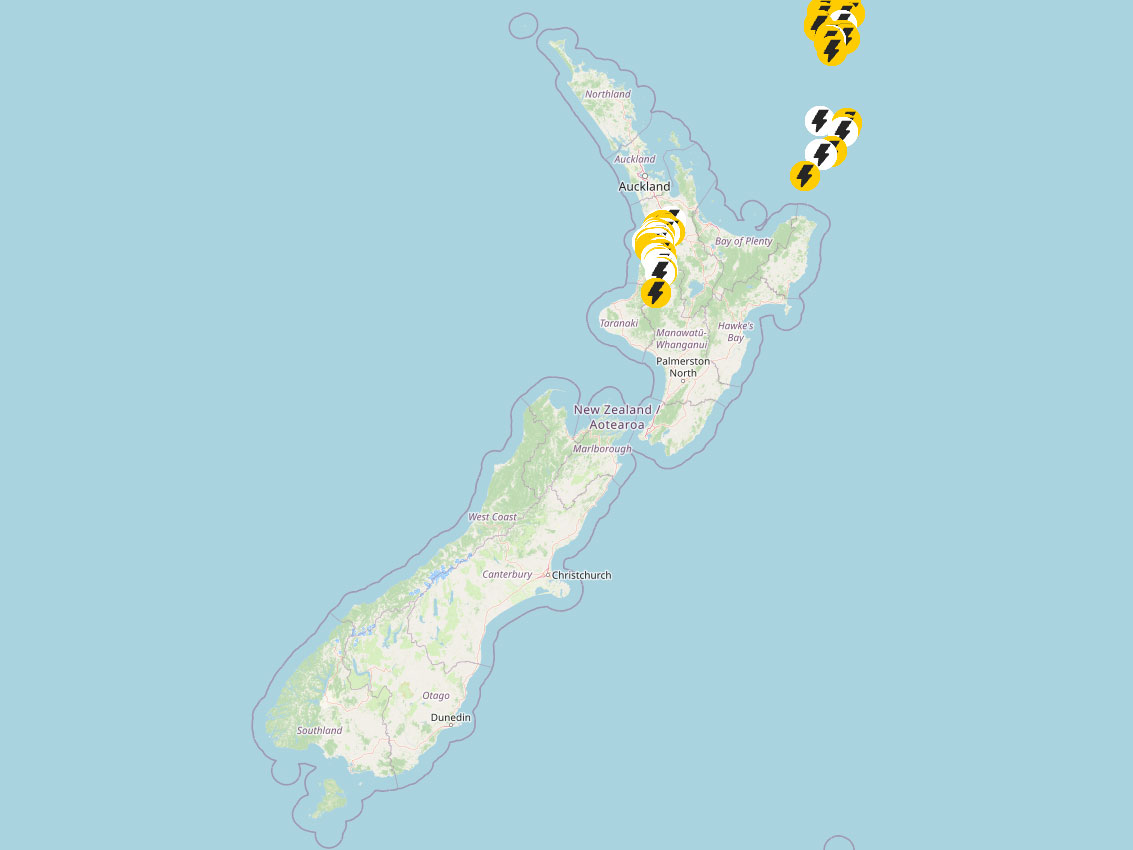
Thunderstorm Outlook
Issued at 7:35am 27/10/2026
Valid from 7:35am 27/10/2026 to 1:00am 28/10/2026
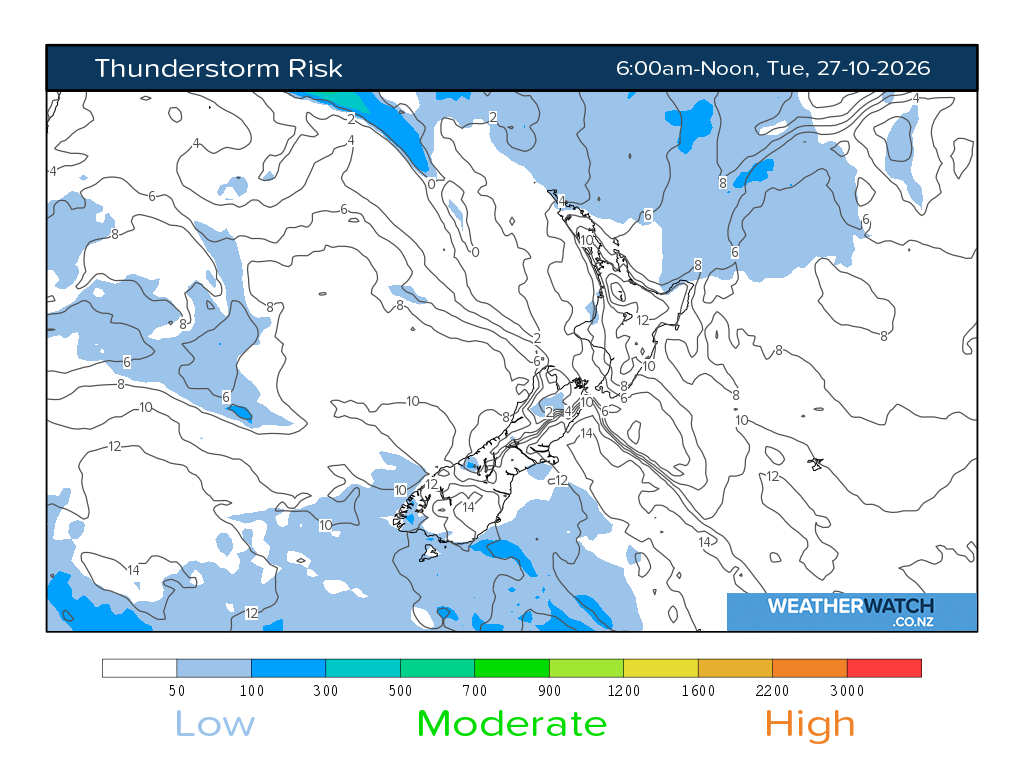
A cold front moves northeast across the North Island in the afternoon. Ahead of this front there is a low risk of thunderstorms in a rain band. The risk is considered moderate however with a southerly change that moves through Hawke's Bay in the afternoon with daytime heating increasing the instability. These storms could bring some localised heavy rain of 10-15 mm/h. The upper atmosphere gradually cools over much of the South Island, and there is some low level convergence that set up in response to daytime heating through parts of Canterbury as indicated on the chart. Here the thunderstorm risk is assessed as low with the possibility of small hail as indicated on the chart. No thunderstorms or significant convection elsewhere in New Zealand.
Issued at 7:46pm 27/10/2026
Valid from 1:00am 28/10/2026 to 1:00pm 28/10/2026
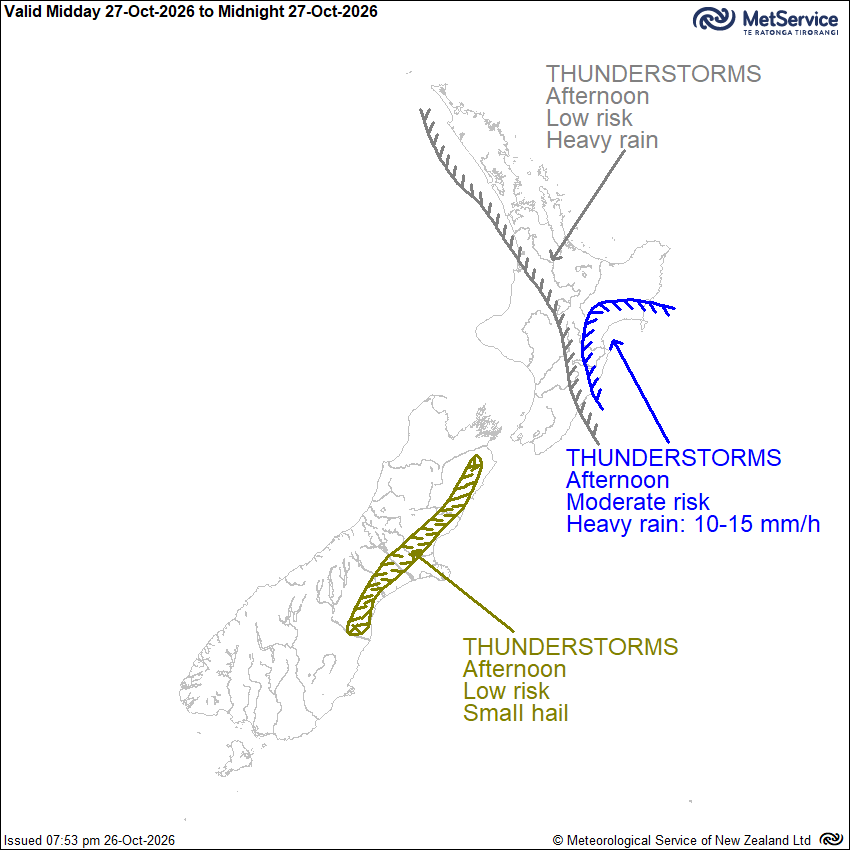
There is minimal risk of thunderstorms or significant convection during this period.
Issued at 9:10am 27/10/2026
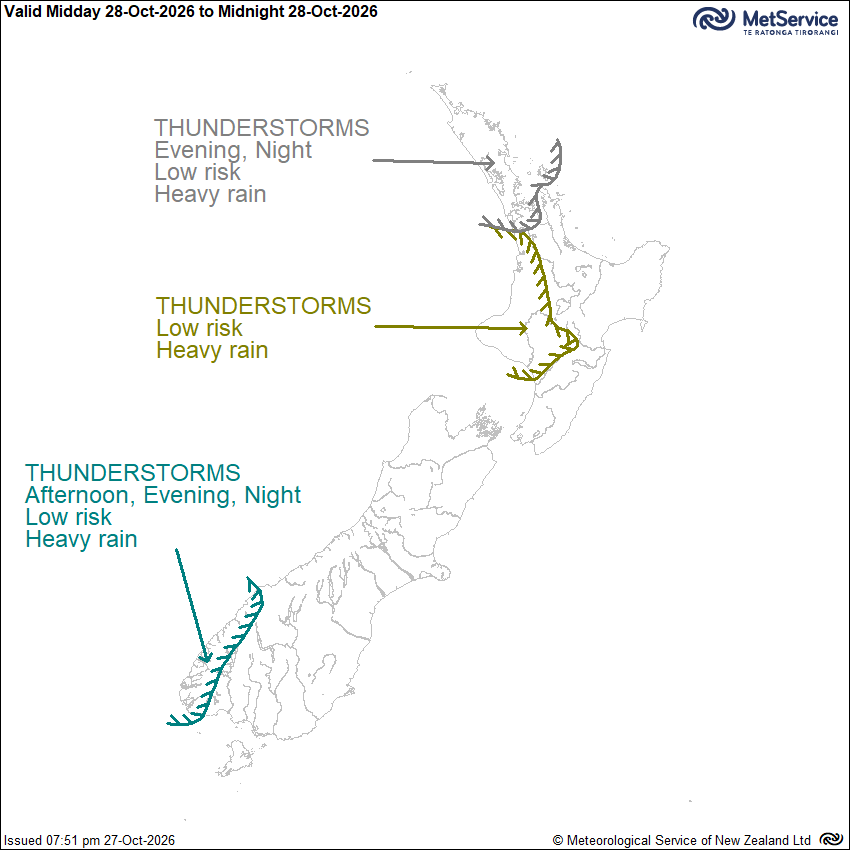
Valid from 1:00pm 28/10/2026 to 1:00am 29/10/2026
A weak front affects the North Island Wednesday afternoon and evening, bringing periods of rain or showers, mainly to central and northern areas. There is a low risk of thunderstorms for the west of Waikato, Waitomo, Taumarunui, Taihape, Taranaki and Whanganui. These storms may bring bursts of heavy rain, 10 to 15 mm/h. In the evening and at night there is a low risk of thunderstorms for Auckland and Northland. These storms may be accompanied by heavy rain. A front moves northeast over the lower South Island from late afternoon, bringing rain. There is a low risk of thunderstorms associated with the front with heavy rain in Fiordland from late afternoon. No thunderstorms or significant convection elsewhere in New Zealand.
Severe Thunderstorm Criteria
In New Zealand, MetService classifies a thunderstorm as severe if one or more of the following criteria are met:
Heavy rain (from thunderstorms):
Rainfall of 25mm/h, or more.
Large hail:
Hailstones 20mm in diameter, or larger.
Strong wind gusts (from thunderstorms):
Gusts of 110km/h (60 knots) or stronger.
Damaging tornadoes:
Fujita F1 - i.e. wind speeds greater than 116km/h (63 knots) or stronger.
Note: some tornadic systems such as funnel clouds, waterspouts and small land-based tornadoes are possible with thunderstorms that may not be classified as severe.